Designing with the Typology
From Decision Models to Visualization Design
The typology is not only a descriptive tool. It can also guide visualization design.
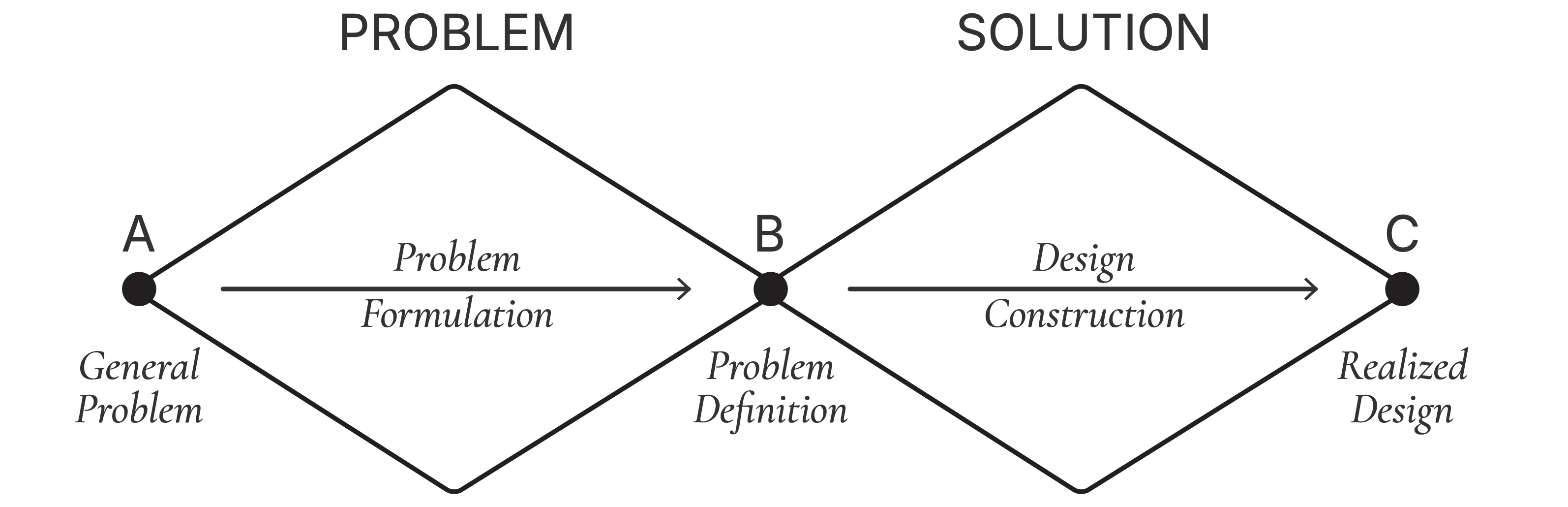
A decision diagram helps designers move from a general problem to a structured problem definition, and then from that problem definition to interface design. This aligns with the double-diamond model of design, where designers first formulate the problem and then construct a solution.
Why This Typology Helps Design
The decision-making typology is task-specific. Because it is designed for decision-making, it can align more closely with how designers reason about decision-support problems than a general visualization typology.
With this typology designers can construct representations of decision-making problems, reason about their structure (e.g., loops, interdependencies between decisions, etc.) and carry that structure into interface design.
Designing with the typology is split into problem formulation and design construction: